Circadian rhythm
Endogenous 24-hour cycles coordinating life with the environment.

Srruhh · CC BY-SA 4.0
A circadian rhythm is a natural, endogenous oscillation that repeats roughly every 24 hours, regulating biological processes to occur at optimal times for an organism's fitness. These rhythms are entrained by environmental cues such as light, temperature, and redox cycles, and have been observed in animals, plants, fungi, and cyanobacteria, with evidence of independent evolution in each kingdom.
- first recorded observation
- 4th century BC by Theophrastus, describing a tamarind tree's leaf movements
- first human clock mutation
- identified in an extended Utah family by Chris Jones, characterized by Ying-Hui Fu and Louis Ptacek
Lore & Background
The first human clock mutation, causing familial advanced sleep phase syndrome, was identified in an extended Utah family by Chris Jones and characterized by Ying-Hui Fu and Louis Ptacek.
Reader's Guide
Circadian rhythms are fundamental to biology, enabling organisms to anticipate and prepare for regular environmental changes, thereby conferring a selective advantage. They are defined by three criteria: an endogenous free-running period of about 24 hours, entrainability by external cues (zeitgebers), and temperature compensation. The discovery of the period gene in Drosophila and subsequent genetic work revealed the molecular basis of these rhythms, leading to a Nobel Prize. In humans, disruptions are clinically recognized as circadian rhythm sleep disorders. The concept has broad applications, from understanding jet lag to optimizing medical treatments. However, the article notes uncertainty about the clockΔ19 mutation's role, and the independent evolution of circadian rhythms across kingdoms suggests convergent adaptation. The historical record, from Theophrastus to modern genetics, shows a gradual shift from observation to molecular understanding, with key experiments by de Mairan, Pittendrigh, and others establishing the endogenous nature of these cycles.
Did You Know?
- The term 'circadian' comes from Latin circa ('around') and dies ('day').
- The first recorded circadian observation was of a tamarind tree's leaf movements, described by Theophrastus in the 4th century BC.
- The first human clock mutation, causing advanced sleep phase syndrome, was found in an extended Utah family.
A Day Written Into Living Things
The circadian rhythm is the most thoroughly examined cycle within the field of chronobiology, representing a roughly 24-hour oscillation in physiological processes found across an astonishing breadth of life. The very name is borrowed from Latin: "circa" meaning "around" and "dies" meaning "day," capturing the essence of a cycle that approximates but does not perfectly lock to a solar day. These rhythms are not confined to any single kingdom. In animals, they govern eating, sleeping, mating, hibernation, migration, and even cellular regeneration. In plants, they drive leaf movements and photosynthetic reactions. Microbial organisms such as fungi and protozoa display them too, and researchers have identified them in bacteria, particularly among cyanobacteria, the organisms once called blue-green algae. All of these cycles are regulated by internal circadian clocks, making them endogenous rather than merely reactive to the outside world. The study of such rhythms falls under chronobiology, and in biochemical terms they are referred to as biochemical oscillations.
Diurnal, Nocturnal, and the Twilight Watchers
Within the broad 24-hour circadian framework, organisms can be sorted by when they are most active. Diurnal species carry out their primary behaviors during daylight hours. Nocturnal species shift that window to the night. A third group, the crepuscular, concentrates its activity in the transitional bands of dawn and dusk; white-tailed deer and certain bat species are cited as examples. What distinguishes true circadian rhythms from other biological cycles is their endogenous origin—they are driven by internal clocks rather than simply triggered by external cues. Yet the boundary is not always clean. In multi-trophic ecological systems, the circadian clock of one organism can set the tempo for another. A striking case involves plants: their endogenous cycles control the availability of photosynthate, the carbon compounds they produce, which in turn regulates the activity of associated bacteria. External factors can still nudge or reset these internal clocks, but the underlying driver remains the organism's own biochemical timing mechanism.
Beyond the 24-Hour Mark: The Wider Family of Rhythms
Circadian rhythms sit at the center of a much larger taxonomy of biological cycles. Infradian rhythms stretch beyond a single day, encompassing circannual or annual cycles that steer migration and reproduction in many plants and animals, as well as the human menstrual cycle. On the opposite end, ultradian rhythms complete their loop in less than 24 hours; familiar examples include the roughly 90-minute REM sleep cycle, the four-hour nasal cycle, and a three-hour rhythm governing growth hormone production. Marine organisms add two more layers: tidal rhythms, which track the approximately 12.4-hour swing between high and low tide, and lunar rhythms tied to the 29.5-day lunar month, which modulate tide levels and affect marine life. At the molecular level, gene oscillations mean that certain genes are expressed more strongly during particular hours than others. Each of these cycles has a peak, called the acrophase, and a trough, the bathyphase, with amplitude measuring the distance between them.
The Biochemical Engine and Its Study
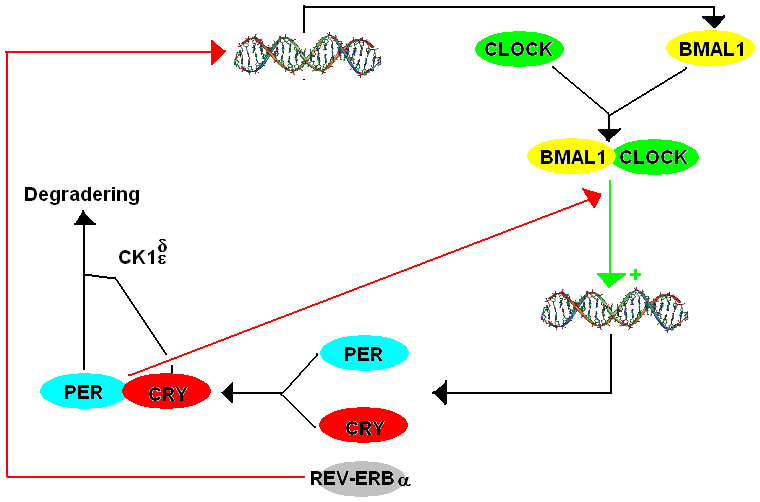
The discipline dedicated to understanding these oscillations is chronobiology, and the biochemical underpinnings of the rhythms are termed biochemical oscillations. The frequency range across all biological rhythms is staggering: from processes that repeat in microseconds to those that produce fewer than one event per decade. At the heart of the biochemical explanation stands the work summarized in Goldbeter's book, which offers a thorough analysis of the kinetic properties and molecular mechanisms that generate and sustain these cycles. The circadian clock, as the best-studied member of this family, exemplifies how internal biochemical feedback loops can produce a stable, near-24-hour oscillation without requiring constant external input. The field is supported by dedicated academic communities, such as the Society for Research on Biological Rhythms, and the topic is catalogued in major reference works like the Encyclopedia Britannica. Together, these resources map a landscape where timing is not an afterthought but a fundamental organizing principle of life.
Gallery
Frequently Asked Questions
Who is Circadian rhythm?
Circadian rhythm is a built-in, self-sustaining biological oscillation that repeats on roughly a 24-hour cycle across animals, plants, fungi, and cyanobacteria. It functions as an organism's internal scheduling system, ensuring physiological events fire at the most advantageous moment of the day.
What are Circadian rhythm's powers/role?
It coordinates the timing of metabolism, sleep, hormone secretion, and gene expression so they align with the external light-dark cycle. Environmental cues—light, temperature shifts, and redox fluctuations—act as signals that reset and synchronize the internal clock each day.
When was Circadian rhythm first spotted?
The earliest recorded observation comes from the 4th century BC, when Theophrastus described the daily leaf-folding movements of a tamarind tree. In humans, the first identified clock-gene mutation was traced through an extended Utah family by Chris Jones and subsequently characterized by Ying-Hui Fu and Louis Ptacek.
Why is Circadian rhythm important?
By pre-timing biological processes to match predictable environmental changes, it directly boosts an organism's survival and reproductive fitness. Without this internal scheduling, critical functions would occur at suboptimal hours, wasting energy and increasing vulnerability.
How does Circadian rhythm's story end?
It has no ending—the rhythm evolved independently in each major kingdom of life, so there is no single origin point or final chapter. As long as organisms must coordinate physiology with a rotating planet, the roughly 24-hour cycle persists.
More in Ecology And Behavior 1-24
Elsewhere in the Ecology And Behavior universe
Spotted an error? Know more?
This is a living reference — every entry is fact-audited, and reader corrections feed straight into our audit queue. Suggest an edit · See this site's audit record