Biome
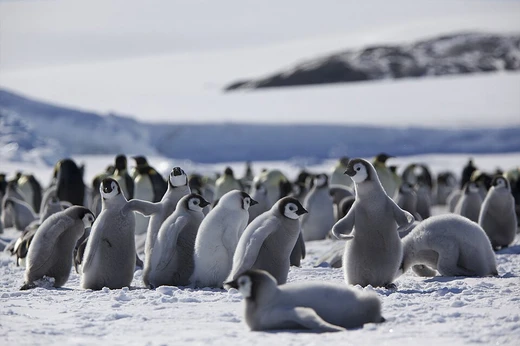
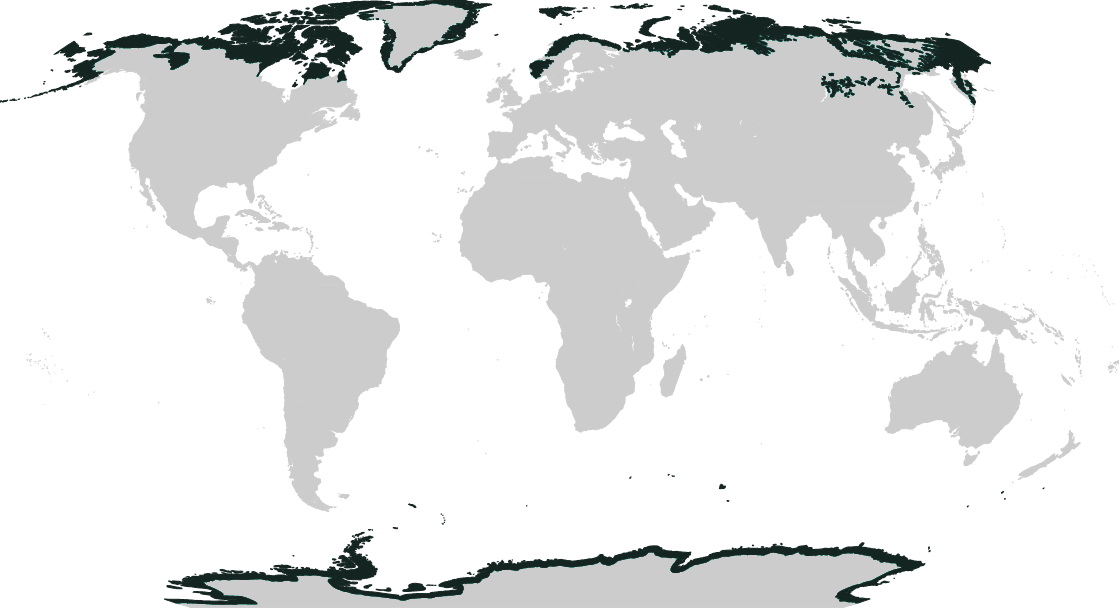
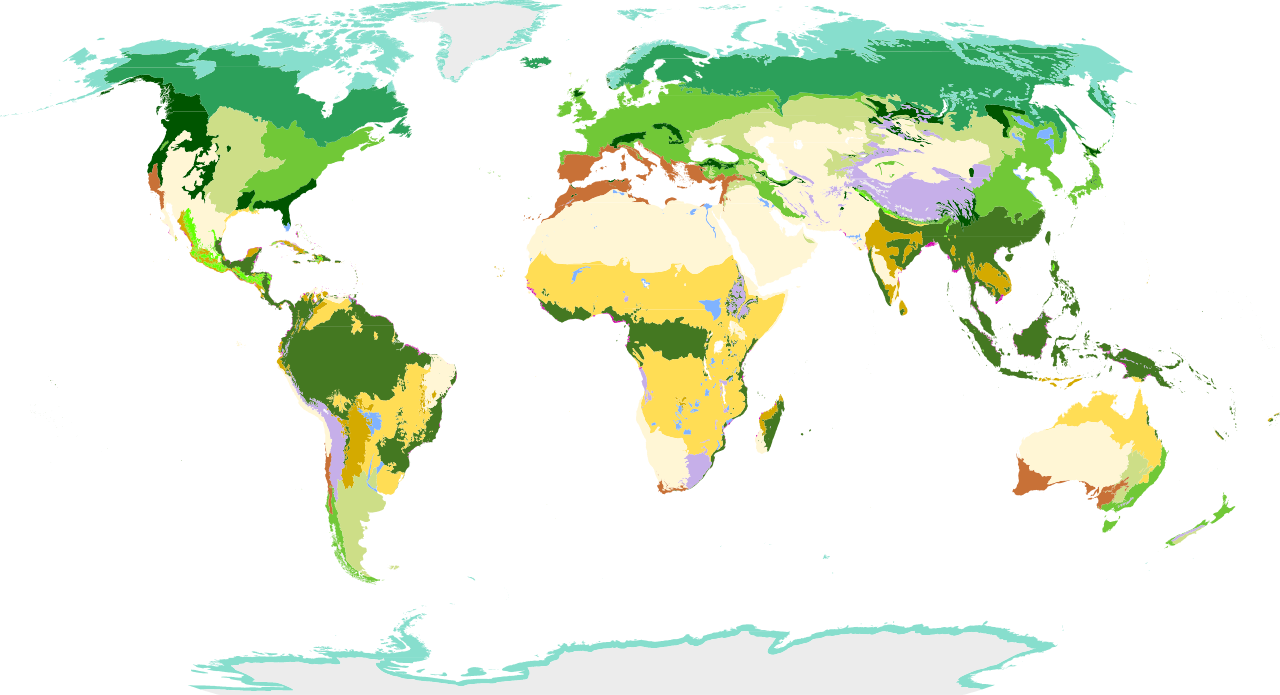
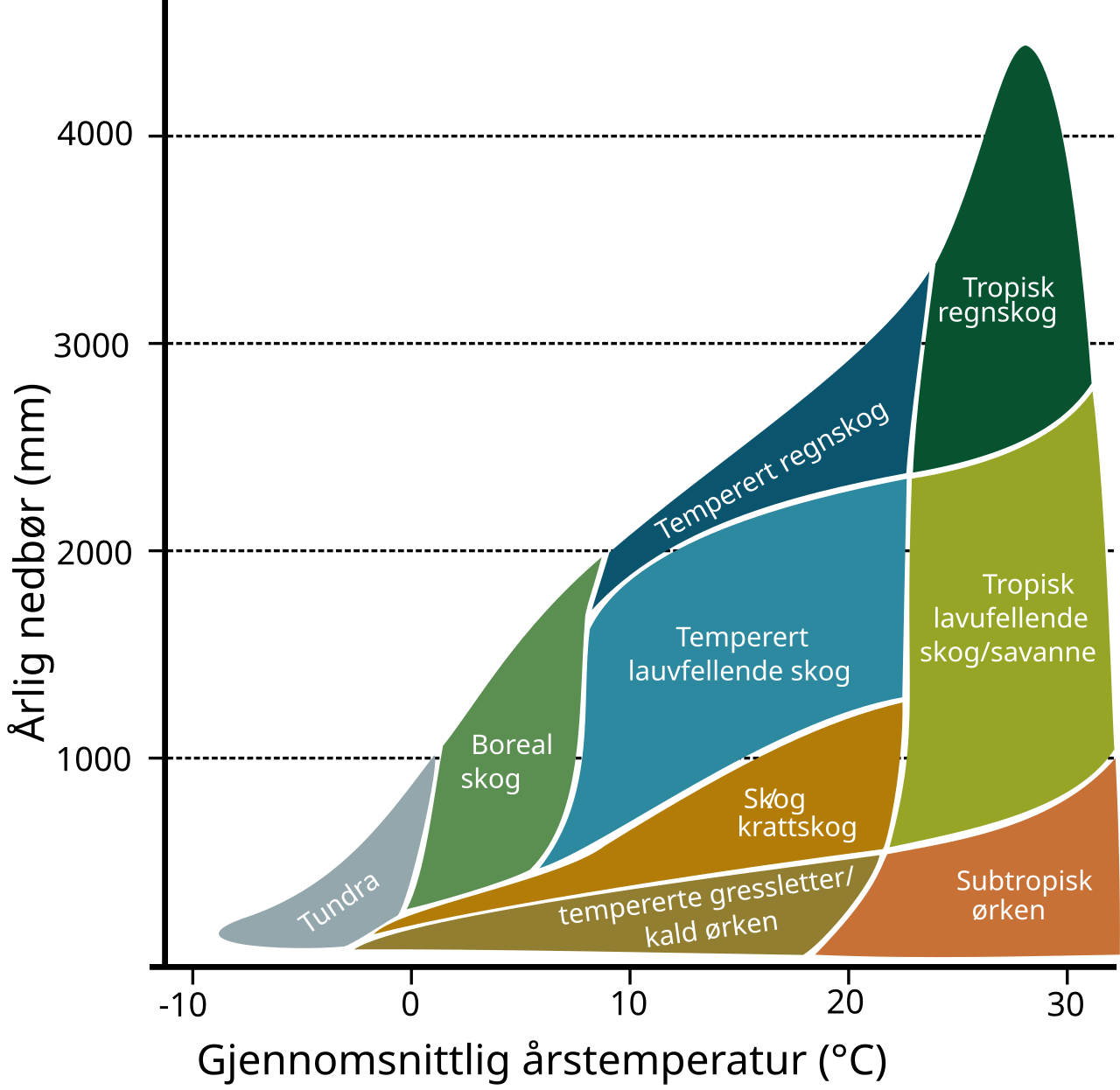
A biome is a region defined by climate, vegetation, and animal life.

Frankemann · CC BY-SA 4.0
A biome is a distinct geographical region defined by its climate, vegetation, animal life, and ecosystem. The concept predates Tansley and was introduced earlier by Clements, though it was popularized by the International Biological Program (1964–74). The term has been used differently in various national literatures, such as in German and Brazilian contexts.
- definition
- Distinct geographical region with specific climate, vegetation, animal life, and ecosystem
- popularized_by
- International Biological Program (1964–74)
- alternative_usage_German
- Similar to biotope (Walter terminology)
- alternative_usage_Brazilian
- Synonym of biogeographic province or morphoclimatic domain
Lore & Background
The term biome was introduced by Clements, predating Tansley's work. However, the term is not used uniformly: in German literature, particularly in Walter's terminology, 'biome' is not simply a synonym for 'biotope'; instead, Walter uses terms like 'zonobiome', 'orobiome', and 'pedobiome', which correspond to the international usage. In Brazilian literature, biome is sometimes a synonym for biogeographic province or for Ab'Sáber's 'morphoclimatic and phytogeographical domain'.
Reader's Guide
The classification of biomes is inherently difficult due to small-scale variations and gradual transitions between regions. Boundaries are drawn arbitrarily, and characterizations rely on average conditions. Whittaker distinguished between biome (plants and animals) and formation (plants only), and used gradient analysis of ecoclines to classify biome-types. The variety of classification schemes indicates that biomes do not fit perfectly into any single system.
Did You Know?
- The International Biological Program (1964–74) popularized the concept of biome.
- In German literature, Walter's terminology uses 'zonobiome', 'orobiome', and 'pedobiome', which are distinct from 'biotope' and align with international usage.
Origins and Intellectual Foundations
The discipline of ecology traces its name to ancient Greek roots—oîkos, meaning house, paired with the suffix -logía, denoting study of. In 1866, the German scientist Ernst Haeckel gave the field its modern German label, Ökologie, and from that moment the term entered scientific vocabulary. Yet the science as practitioners recognize it today took shape later, in the 1890s, when a cohort of American botanists began systematically investigating how organisms relate to their surroundings. Ecology sits firmly within biology, concerned with the abundance, biomass, and geographic distribution of living things, but it draws heavily on neighboring disciplines including biogeography, evolutionary biology, genetics, ethology, and natural history. Two pillars of evolutionary thought—adaptation and natural selection—serve as cornerstones upon which modern ecological theory is built, linking the study of present-day communities to the deep processes that shaped them over vast stretches of time.
Hierarchy and the Logic of Scale
Ecology organizes the living world into a nested hierarchy running from individual organisms upward through populations, guilds, communities, ecosystems, biomes, and ultimately the entire biosphere. This structure is not merely a cataloguing convenience; it exhibits what scientists call panarchy, a framework in which cause and effect are deliberately disproportionate. A tiny shift in a critical variable—say, the number of nitrogen-fixing organisms in a soil community—can trigger cascading changes that are disproportionate to the initial perturbation and, in some cases, irreversible. The scale at which one observes matters enormously. A single tree may be negligible when classifying a forest ecosystem, yet it constitutes the entire world for organisms dwelling in its canopy. Over the lifespan of one leaf, several generations of aphids may come and go, and each aphid in turn hosts its own diverse bacterial community. The emergent patterns arising from these layered connections cannot be predicted by studying any single species in isolation; they become visible only when the ecosystem is examined as an integrated whole.
Ecosystem Dynamics and the Services They Deliver
An ecosystem is best understood as a dynamic web in which living organisms, the communities they form, and the non-living components of their environment interact continuously. Within this web, processes such as primary production, nutrient cycling, and niche construction govern how energy and matter flow through an environment. Ecosystems also possess biophysical feedback mechanisms that moderate the forces acting on both biotic and abiotic components, creating a kind of self-regulating balance. The practical payoff of these processes is enormous. Ecosystems sustain life-supporting functions and deliver what are called ecosystem services: the production of biomass in the form of food, fuel, fiber, and medicine; the regulation of climate; the maintenance of global biogeochemical cycles; water filtration; soil formation; erosion control; and flood protection. These services carry scientific, historical, economic, and intrinsic value. The field's practical reach extends into conservation biology, wetland management, natural resource management, and human ecology, where understanding these dynamics informs real-world decisions about how landscapes are used and protected.
Biodiversity, Niche, and the Imperative of Conservation
Biodiversity, short for biological diversity, spans every level of biological organization from individual genes up through entire ecosystems, encompassing species diversity, ecosystem diversity, and genetic diversity. Understanding how this diversity shapes ecological processes is central to the discipline. The concept of niche, formalized in 1957 by G. Evelyn Hutchinson as the set of biotic and abiotic conditions allowing a species to persist at stable population sizes, further refines the picture into fundamental and realized niches. Crucially, organisms do not merely respond to environmental pressures; they actively modify their habitats, creating a regulatory feedback loop known as niche construction. Conservation work must account for all of this complexity. Priorities and management techniques differ depending on whether one addresses species-level or ecosystem-level concerns. Natural capital supporting populations is critical for maintaining ecosystem services, and the loss of species migration pathways—such as riverine fish runs or avian insect control—has been identified as one mechanism through which those service losses are felt. Conservation planners translate this understanding into management recommendations for consulting firms, governments, and industry.
Gallery
Frequently Asked Questions
What is a Biome?
A biome is a distinct geographical region defined by its specific climate, vegetation, animal life, and the ecosystem that ties those elements together.
Who popularized the concept of Biome?
The International Biological Program (1964–74) is widely credited with bringing the term into broad scientific use, although the idea was introduced earlier by Clements and actually predates Tansley's work.
How is 'Biome' used differently in German and Brazilian scientific contexts?
In German literature the term aligns closely with Walter's concept of a biotope, while in Brazilian usage it functions as a synonym for biogeographic province or morphoclimatic domain.
What factors define the boundaries of a Biome?
A biome is delineated by its particular combination of climate patterns, plant communities, animal populations, and the overarching ecosystem within a given geographical region.
How does Biome fit into the broader history of ecological terminology?
The concept was first introduced by Clements before Tansley's contributions and later gained wider recognition through the International Biological Program of the 1960s and 70s, though its exact usage has varied across national scientific traditions.
More in Ecology And Behavior 1-24
Elsewhere in the Ecology And Behavior universe
Spotted an error? Know more?
This is a living reference — every entry is fact-audited, and reader corrections feed straight into our audit queue. Suggest an edit · See this site's audit record