Primary production
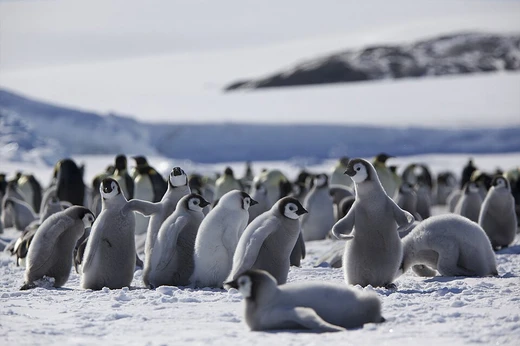
Primary production fuels nearly all life on Earth.

M.E.M.Walton, I.Al-Maslamani, M.Chatting, D.Smyth, A.Castillo, M.W.Skov and L.Le · CC BY-SA 4.0
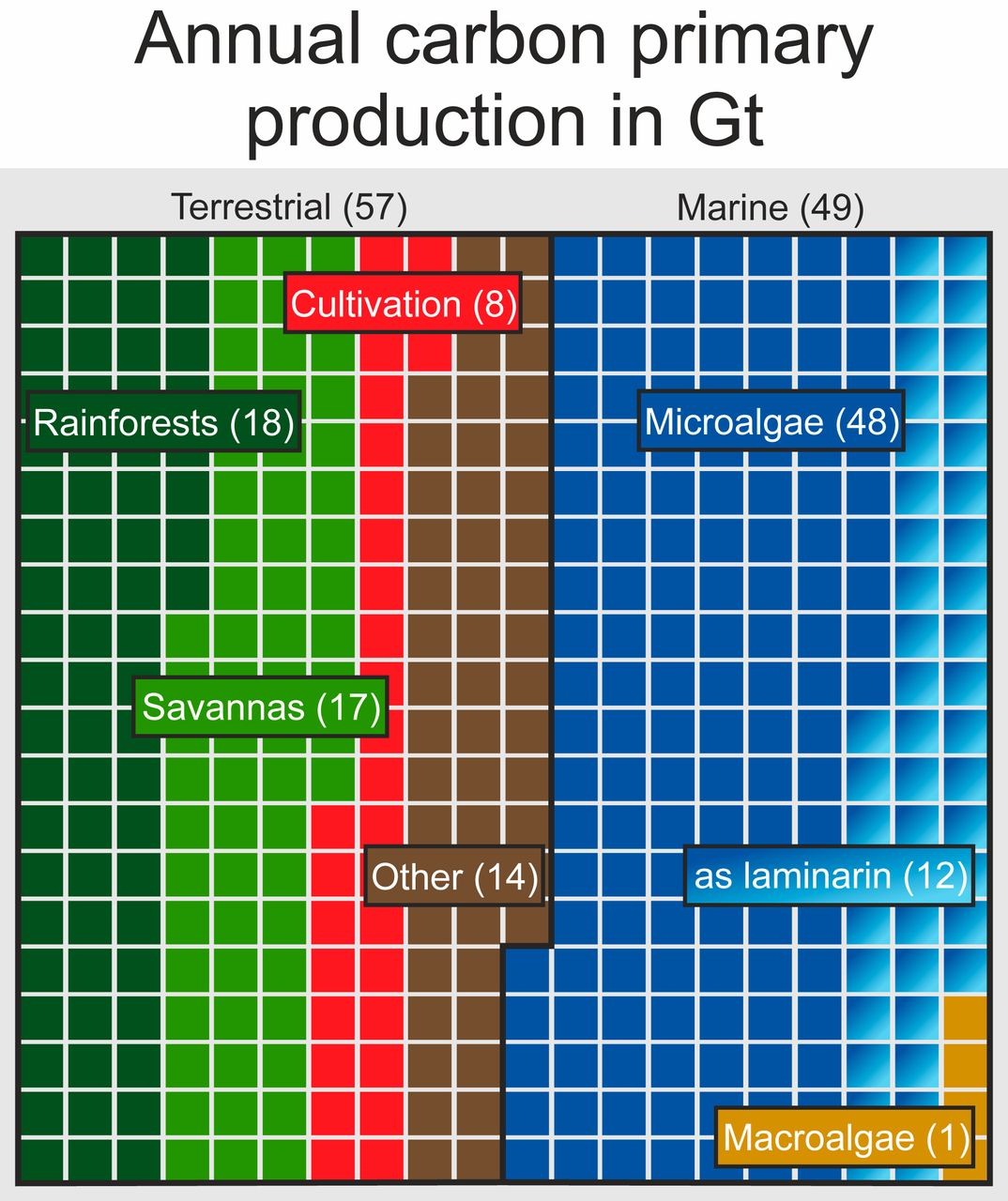
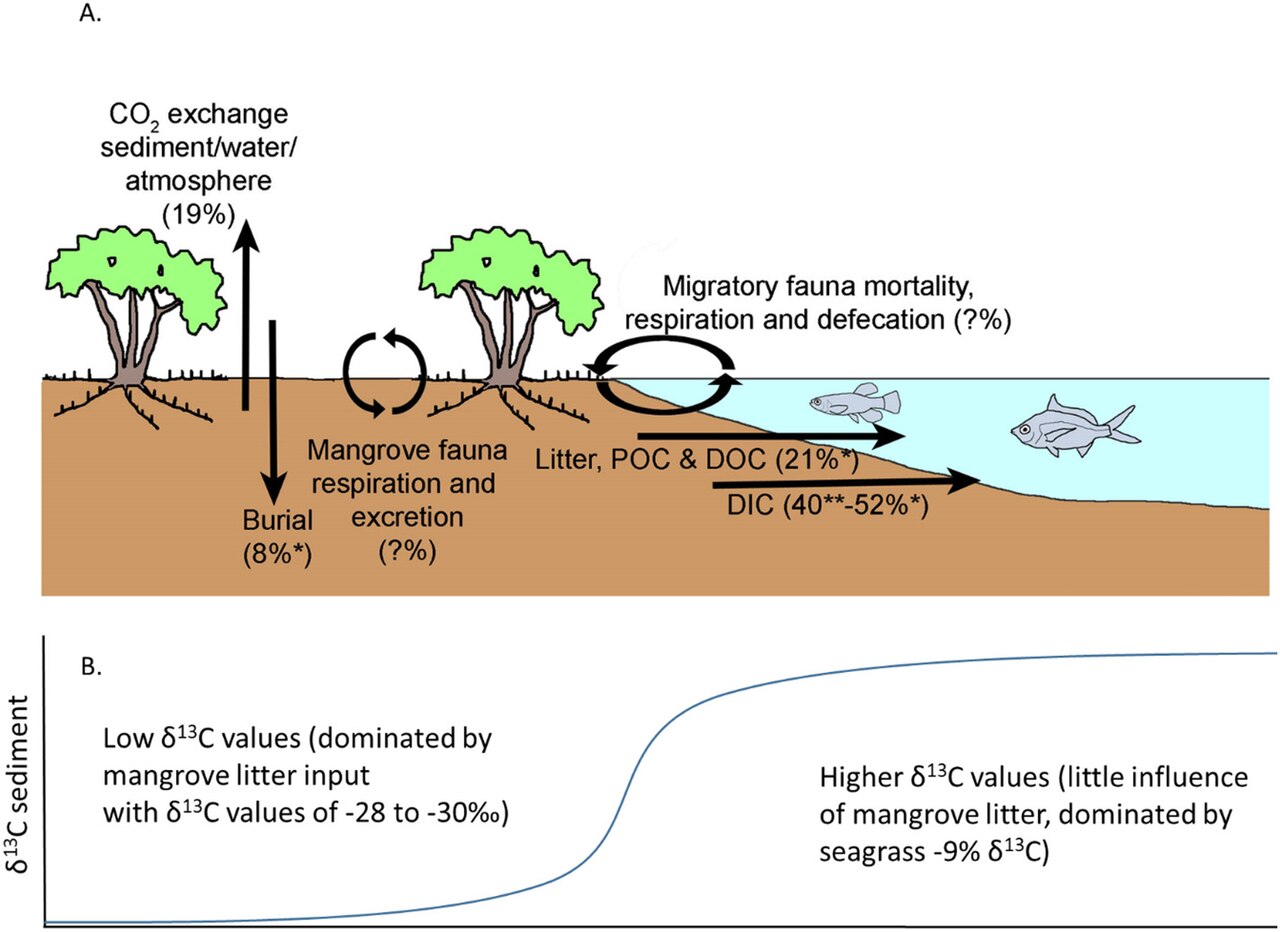
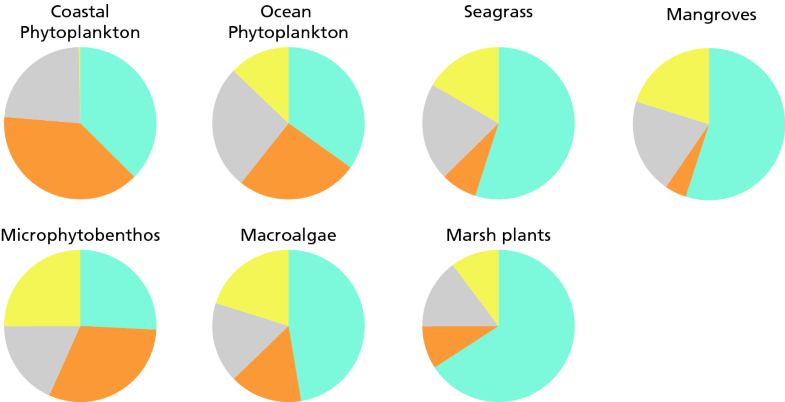
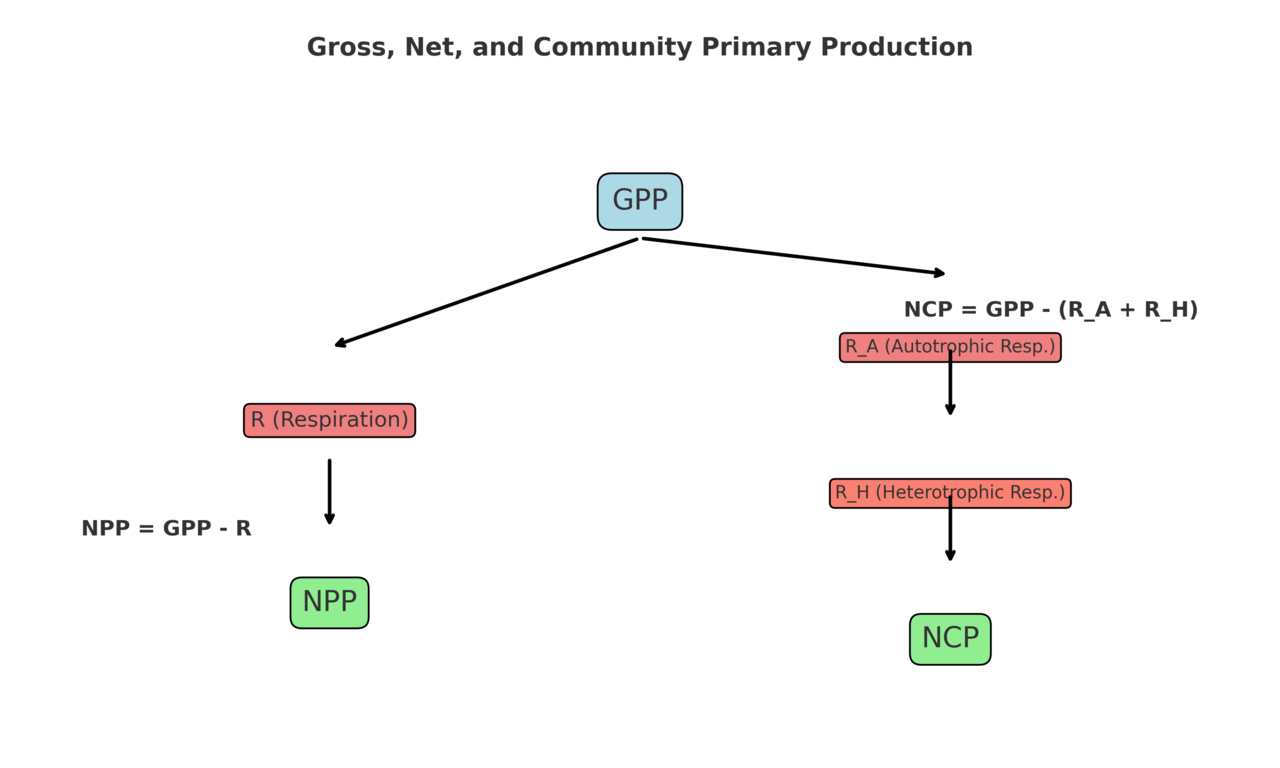
Primary production is the synthesis of organic compounds from atmospheric or aqueous carbon dioxide, primarily through photosynthesis (using light) or chemosynthesis (using inorganic chemical reactions). It forms the base of the food chain, as almost all life on Earth relies directly or indirectly on the energy fixed by primary producers—autotrophs such as plants on land and algae in aquatic environments. Ecologists distinguish between gross primary production (total energy fixed) and net primary production (energy remaining after respiration).
- field
- Ecology
- known_for
- Foundation of the food chain; synthesis of organic compounds from CO₂
- key_processes
- Photosynthesis and chemosynthesis
- main_terrestrial_producers
- Vascular plants
- main_oceanic_producers
- Algae (phytoplankton)
- units_of_measurement
- g C m⁻² yr⁻¹ (mass per area per time)
Lore & Background
Primary production occurs when organisms convert inorganic carbon dioxide into organic compounds using energy from sunlight (photosynthesis) or from inorganic chemical reactions (chemosynthesis). The simplified equations for photosynthesis and one form of chemosynthesis are: CO₂ + H₂O + light → CH₂O + O₂, and CO₂ + 2 H₂S + O₂ → CH₂O + 2 S + H₂O. The resulting reduced carbohydrates, such as glucose, are used to build proteins, lipids, and nucleic acids, or are respired for energy. Heterotrophs consume primary producers, transferring energy upward through the food web.
Reader's Guide
Primary production is the fundamental energy input for Earth's ecosystems. On land, vascular plants dominate, with productivity limited by water availability, temperature, and light. Net primary production (NPP = GPP minus plant respiration) represents the energy available for growth and herbivore consumption. Factors such as water-use efficiency (via C4 and CAM photosynthesis in plants) and nutrient availability in oceans regulate production rates. Understanding primary production is critical for assessing ecosystem health and predicting responses to environmental changes, such as potential reductions in ocean NPP of 3–10% under different emissions scenarios.
Did You Know?
- Gross primary production (GPP) is the total chemical energy fixed by primary producers; net primary production (NPP) subtracts energy used in respiration.
- In terrestrial ecosystems, vascular plants perform almost all primary production; in oceans, algae (phytoplankton) are the dominant producers.
- Transpiration accounts for about 90% of water use in plants and is regulated by stomata, which also control carbon dioxide uptake.
The Unidirectional Cascade of Energy
Energy in ecosystems moves in one direction only — from the sun, through producers, up through successive consumer levels — and it never flows backward. This one-way progression is what gives food chains their arrow notation, with the arrowhead pointing toward where energy is heading. At every single transfer, a portion of that energy dissipates as heat, a consequence rooted in thermodynamics, the branch of physics that governs how energy exchanges between systems. The result is a trophic pyramid: broad at the base where producers sit, narrowing dramatically toward the apex where top carnivores reside. On average, roughly ten percent of the net primary productivity at one level is available to the next, though ecological efficiency can swing anywhere between five and twenty percent depending on the particular ecosystem. The reason for this steep decline is straightforward: organisms must spend energy on cellular respiration just to stay alive, and that respiration releases heat into the environment. This is why a single large predator requires a vast supporting base of plants and herbivores to sustain itself.
Photosynthesis, Respiration, and the Carbon Loop
The engine of nearly all terrestrial and aquatic food webs is a beautifully symmetrical pair of chemical reactions. In photosynthesis, a producer draws in water and atmospheric carbon dioxide, harnesses sunlight, and reassembles those molecules into glucose and oxygen. Cellular respiration runs the exact opposite script: oxygen and sugar are consumed, and the products are carbon dioxide, water, and usable energy. The carbon dioxide and water released by respiration can feed straight back into the photosynthetic process, creating a closed carbon loop that sustains both the plant and the organisms that eat it. Producers — algae, mosses, grasses, trees, shrubs — are the critical link because they are the only organisms in the chain that can capture solar radiation and lock it into a storable chemical form. Without that conversion, no herbivore, no carnivore, no decomposer would ever have access to the sun's energy. The glucose a plant stores is, in essence, a battery that every consumer downstream must ultimately draw from.
Life in the Lightless Deep — Chemosynthesis
Far below the sunlit surface of the ocean, where no photons ever penetrate, an entirely different strategy powers an ecosystem. At hydrothermal vents, superheated water releases chemicals such as hydrogen, hydrogen sulfide, and methane into the surrounding seawater. Chemosynthetic bacteria exploit the chemical bonds in hydrogen sulfide and oxygen to drive a process that mirrors photosynthesis in its output: carbon dioxide is converted into glucose, while water and sulfur are released as byproducts. The energy source is not solar radiation but the stored chemical potential in those inorganic molecules. Organisms that feed on these bacteria then use oxygen to carry out cellular respiration on the glucose, much as a land herbivore would after grazing on a meadow. This means that in the deepest, darkest corners of the ocean, the fundamental logic of the food chain — a producer converting an external energy source into organic matter, followed by consumers passing that matter up the pyramid — holds true even in the complete absence of light.
Carnivorous Plants — Photosynthesis with a Predatory Edge
In soils and waters where nitrogen and phosphorus are scarce, some producers have evolved a striking workaround: they hunt. Carnivorous plants still perform photosynthesis and still depend on sunlight for their energy, but they supplement their nutrient intake by trapping and digesting small animals. Three classic trap designs illustrate the ingenuity involved. Pitcher plants advertise themselves with scent and color, luring insects into a bulb-shaped cavity where digestive enzymes are secreted, breaking down the prey and sealing off any escape. Flypaper plants, the most widespread group, coat their leaves in a sticky liquid that lets an insect land but prevents it from taking off. Venus flytraps go a step further, sensing the physical contact of an insect on their leaf surfaces and snapping shut to enclose the meal. Through these adaptations, carnivorous species have colonized nearly every continent on Earth, with the sole exceptions being Antarctica and the Arctic Circle.
Gallery
Frequently Asked Questions
What is Primary production?
Primary production is the process by which organisms convert carbon dioxide from the air or water into organic matter. This is accomplished mainly through photosynthesis (harnessing sunlight) or chemosynthesis (drawing energy from inorganic chemical reactions).
How does Primary production actually work in different environments?
Autotrophs capture energy from light or chemical reactions and use it to build organic compounds out of CO₂. On land, vascular plants handle most of this work, while in aquatic systems phytoplankton and other algae take the lead.
What's the difference between gross and net Primary production?
Gross primary production measures the total energy an ecosystem fixes from CO₂, whereas net primary production subtracts the energy the producers themselves burn through respiration. Net primary production therefore tells you how much usable energy is actually left over for the rest of the food web.
How do ecologists measure Primary production?
The standard unit is grams of carbon per square meter per year (g C m⁻² yr⁻¹), capturing how much carbon gets fixed over a given area and time. This common metric lets researchers compare productivity across wildly different habitats, from tropical forests to open ocean.
Why is Primary production so important to ecology?
It sits at the very base of every food chain because it is the original source of chemical energy for virtually all life on Earth. Without the carbon-fixing work of plants, algae, and other autotrophs, consumers at every higher trophic level would have no energy to sustain themselves.
More in Ecology And Behavior 25-38
Elsewhere in the Ecology And Behavior universe
Spotted an error? Know more?
This is a living reference — every entry is fact-audited, and reader corrections feed straight into our audit queue. Suggest an edit · See this site's audit record