Sociality
Degree of animal association in social groups and cooperation.

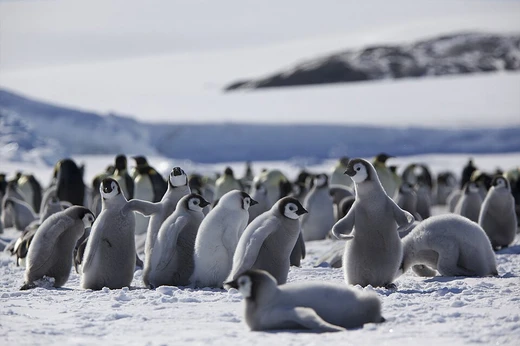
Sociality is the degree to which individuals in an animal population tend to associate in social groups and form cooperative societies. It is a survival response to evolutionary pressures, such as predation and parasitism, and ranges from solitary behavior to the highest recognized form, eusociality.
- field
- Sociobiology, Ethology
- known_for
- Classification of sociality levels from solitary to eusocial
- key_concepts
- Parental investment, subsociality, presociality, eusociality
Lore & Background
Sociality is defined as the degree to which individuals in an animal population tend to associate in social groups and form cooperative societies, with the desire or inclination known as gregariousness. It is a survival response to evolutionary pressures; for example, when a mother wasp stays near her larvae in the nest, parasites are less likely to eat the larvae. Biologists suspect that pressures from parasites and other predators selected this behavior in wasps of the family Vespidae. This wasp behavior demonstrates the most fundamental characteristic of animal sociality: parental investment, which is any expenditure of resources to benefit one's offspring, detracting from a parent's capacity to invest in future reproduction and aid to kin.
Reader's Guide
The concept of sociality provides a framework for understanding the evolution of cooperative behavior across the animal kingdom. The highest degree of sociality recognized by sociobiologists is eusociality, characterized by overlapping adult generations, reproductive division of labor, cooperative care of young, and in the most refined cases, a biological caste system. Eusociality has evolved in several insect orders, including Hymenoptera and Blattodea, and has been observed in some crustaceans such as Synalpheus regalis. Subsociality, where parents care for their young for some time, is common in the animal kingdom and widely distributed among winged insects. The study of sociality has implications for understanding cognitive abilities, as social mammal predators such as spotted hyenas and lions have been found to be better than non-social predators at solving problems requiring innovation. The classification remains debated, particularly regarding whether a species needs an irreversibly sterile caste to be considered eusocial.
Did You Know?
- Sociality is a survival response to evolutionary pressures, such as parasites selecting for maternal care in wasps of the family Vespidae.
- The highest degree of sociality recognized by sociobiologists is eusociality, which includes overlapping adult generations, reproductive division of labor, and cooperative care of young.
- Subsociality, where parents care for their young for some time, is common in the animal kingdom and has evolved independently many times among winged insects.
- Eusociality has arisen among some crustaceans, such as Synalpheus regalis snapping shrimp, which rely on fortress defense in tropical reefs.
More in Ecology And Behavior 25-38
Elsewhere in the Ecology And Behavior universe
Spotted an error? Know more?
This is a living reference — every entry is fact-audited, and reader corrections feed straight into our audit queue. Suggest an edit · See this site's audit record