R/K selection theory
Theory on trade-offs between offspring quantity and quality.

Thomas Hunt Morgan · Public domain
The r/K selection theory is an evolutionary hypothesis that examines the selection of traits in an organism that trade off between quantity and quality of offspring. Species that produce more offspring at the expense of reduced individual parental investment are termed r-strategists, while those that make greater parental investment at the expense of a reduced quantity of offspring are termed K-strategists. The theory was popular in the 1970s and 1980s as a heuristic device but lost importance in the early 1990s after criticism by several empirical studies.
- field
- Ecology, evolutionary biology
- known_for
- r/K selection theory, life history strategies
- coined_by
- Robert MacArthur and E. O. Wilson
- basis
- Work on island biogeography
Lore & Background
The terms r and K are drawn from the Verhulst model of population dynamics, where r is the maximum growth rate and K is the carrying capacity of the local environment (from German Kapazität). In unstable environments, r-selection predominates, favoring high fecundity, small body size, early maturity, and short generation time. In stable environments, K-selection predominates, favoring large body size, long life expectancy, and fewer offspring with extensive parental care.
Reader's Guide
The r/K selection theory served as a popular heuristic device in ecology during the 1970s and 1980s, helping to explain patterns of reproductive strategy across species. However, it lost importance in the early 1990s after being criticized by several empirical studies. A life history paradigm has since replaced the r/K selection paradigm, though it continues to incorporate the theory's important themes as a subset. Some scientists now prefer the terms fast versus slow life history as replacements for r versus K reproductive strategy. The theory has been applied at various levels, from subspecies (e.g., African honey bee versus Italian bee) to whole groups (e.g., bacteriophages), and some researchers have attempted to apply it to human behaviors, including inflammatory responses.
Did You Know?
- The terms r and K come from the Verhulst model of population dynamics, where r is the maximum growth rate and K is the carrying capacity.
- The letter K came from the German word Kapazität (capacity).
- A typical r-selected species is the dandelion (genus Taraxacum).
- Organisms with K-selected traits include elephants, sharks, humans, and whales.
Origins and Mathematical Roots
The r/K selection framework traces its formal naming to 1967, when ecologists Robert MacArthur and E. O. Wilson introduced the terminology while working on island biogeography. Although the broader idea that organisms evolve different life-history strategies stretches back further, visible in earlier plant ecology literature, the specific r/K vocabulary crystallized from their collaboration. The letters themselves are borrowed directly from the Verhulst population-dynamics equation, a simplified model in which population change over time depends on two constants: r, representing the maximum intrinsic growth rate, and K, the carrying capacity of a given habitat, a term derived from the German Kapazitätsgrenze. In this equation, when a population exceeds its carrying capacity the growth term turns negative, signaling decline. MacArthur and Wilson repurposed these two parameters as shorthand for two opposing evolutionary pressures: one favoring rapid numerical expansion and the other favoring efficient resource use near the environmental ceiling. This elegant borrowing from a mathematical model gave the theory its compact, memorable label and anchored ecological intuition in formal population biology.
The Two Strategic Poles
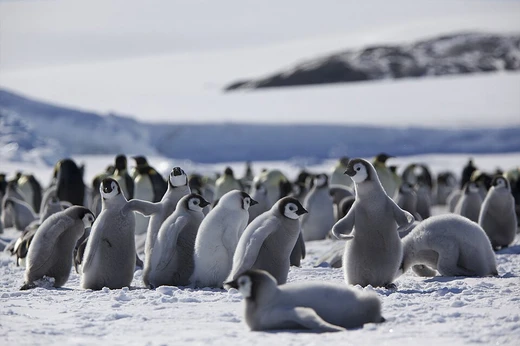
At one end of the spectrum sit r-strategists, organisms that prioritize sheer reproductive output. They tend to be small-bodied, reach maturity quickly, produce enormous numbers of offspring, and scatter those offspring over wide areas. Each individual young has a low chance of reaching adulthood, so the strategy is essentially one of statistical volume. Bacteria, diatoms, insects, grasses, cephalopods, birds, and rodents all display these traits to varying degrees; the dandelion is often cited as a textbook example. In the scientific literature these species are sometimes called opportunistic. At the opposite pole, K-strategists operate near the carrying capacity of their habitat, competing intensely for limited resources. They are typically larger, live longer, and produce far fewer young, each of which receives substantial parental investment and carries a comparatively high probability of surviving to maturity. Elephants, sharks, whales, and humans exemplify this pole, as do smaller but long-lived species like Arctic terns, parrots, and eagles. These organisms are described in the literature as equilibrium species because their populations hover close to the maximum the environment can sustain.
Environment as the Selective Driver
The central logic of r/K selection is that environmental stability acts as the primary filter determining which strategy pays off. In habitats that are unpredictable or frequently disrupted, the odds that any single offspring will survive to adulthood are low. Under those conditions, a parent that produces many cheap offspring, each requiring minimal investment, statistically hedges its bets, because the likelihood that all or most will perish is high. There is little evolutionary reward for building elaborate competitive adaptations when the environment may shift before those traits matter. Conversely, in stable, predictable environments where resources are consistently available but finite, the calculus flips. A parent can confidently channel energy into a small number of expensive offspring, knowing the conditions are likely to persist long enough for those young to mature. The terms cheap and expensive in ecology refer not to monetary cost but to the degree of parental commitment and the expendability of each offspring. This environmental framing explains why the two strategies are not moral rankings but adaptive responses to fundamentally different ecological pressures.
From Heuristic to Historical Footnote
During the 1970s and 1980s, r/K selection served as a widely used heuristic in ecology, offering a simple binary lens through which to interpret the enormous diversity of reproductive strategies in nature. Its compact vocabulary made it attractive for teaching and for generating testable predictions across taxa. However, by the early 1990s a wave of empirical studies exposed the oversimplification at the theory's core. Many organisms do not sort neatly into one camp or the other; trees, for instance, combine K-strategist traits such as longevity and strong competitive ability with r-strategist reproductive behavior, producing thousands of widely dispersed seeds. In response, the broader life-history paradigm absorbed the key themes of r/K selection as a subset rather than a standalone framework. Today, many ecologists have moved toward the language of fast versus slow life histories, a terminology that captures the same underlying trade-off between quantity and quality of offspring without the rigid binary that limited the original model.
Gallery

Frequently Asked Questions
Who developed R/K selection theory?
Robert MacArthur and E. O. Wilson coined the concept, building on their earlier research into island biogeography. It emerged as an evolutionary framework for understanding how organisms balance reproductive output against parental care.
What does R/K selection theory explain?
It describes a fundamental trade-off in life history strategies: r-strategists prioritize producing many offspring with minimal individual investment, while K-strategists invest more heavily in fewer young. The theory served as a widely used heuristic tool in ecology and evolutionary biology during the 1970s and 1980s.
What happened to R/K selection theory after its peak?
The framework fell out of favor in the early 1990s when multiple empirical studies raised serious criticisms of its broad generalizations. It transitioned from a dominant organizing principle to a historical reference point in the study of life history evolution.
Why is R/K selection theory important?
It gave ecologists a simple, intuitive vocabulary for categorizing species along a reproductive spectrum, shaping decades of research on life history strategies. Even after its decline, the r/K distinction remains a recognizable shorthand in ecology textbooks and broader discussions of evolutionary trade-offs.
What field does R/K selection theory belong to?
It sits at the intersection of ecology and evolutionary biology, specifically addressing how natural selection shapes reproductive traits. The concept grew out of MacArthur and Wilson's work on island biogeography before becoming a standalone heuristic in life history research.
More in Ecology And Behavior 25-38
Elsewhere in the Ecology And Behavior universe
Spotted an error? Know more?
This is a living reference — every entry is fact-audited, and reader corrections feed straight into our audit queue. Suggest an edit · See this site's audit record